FYI: If you buy something through a link on this site I may earn a commission - at NO extra cost to you.
About Aspirin For Dogs
Although Aspirin hasn't been formally approved for veterinary use, it is sometimes suggested by veterinarians for dogs who are suffering from minor aches/pains, or who have an injury causing discomfort.
However, you should NEVER give your dog aspirin without first consulting with a veterinarian.
Puppies, pregnant dogs and dogs with certain health conditions should not take aspirin. Even if your vet gives you the go-ahead to give aspirin to your dog, it's vitally important to get the dosage correct, and to only use it as a short-term treatment.
If you want to give Fido some aspirin for pain or discomfort, there are a lot of things you need to know before you pop that first pill in his mouth.
Aspirin can have side effects which range from mild to severe (even life-threatening), and it's important to understand how this drug works and what safety precautions you need to follow.
Use these links to jump straight to a specific section or simply scroll down to get all the information you need:
- Dogs & Aspirin 101
- Getting the dosage right for your dog
- Best formulas for dogs
- Possible Side Effects
- Symptoms of Aspirin overdose & Poison First Aid

Aspirin for Dogs 101
Aspirin is primarily a pain-killer.
It is also a blood-thinner which means it reduces bloods' ability to clot.
Aspirin can relieve pain effectively, and relatively safely, for some dogs, in some situations when specifically recommended by a veterinarian and used for SHORT PERIODS.
There are two main dangers associated with using aspirin for dogs on a long-term basis:
- Aspirin is made from acetylsalicylic acid and when used for an extended length of time it can actually destroy cartilage and end up making joint problems worse.
- Because aspirin also thins the blood it can make existing blood clotting disorders worse, or cause internal bleeding.
Which Dogs Should NOT Be Given Aspirin?
There are some health conditions which can interact with aspirin in a dangerous, even fatal, way.
If your dog has any of these issues, please do not give him aspirin without consulting your veterinarian first.
- Any health condition which causes them to bleed easily
- Internal ulcers or bleeding issues
- Liver disease
- Kidney Disease
- Vitamin K deficiency
- Von Willebrands' Disease
- Pregnant or nursing dams
- Puppies
- Dogs who are taking corticosteroids
- Dogs who are currently taking any other medication
- Dogs who have recently had surgery or a serious injury
Regular 'people' aspirin formulas shouldn't be given to a dog for more than 5 days maximum.
Because Aspirin thins the blood, it's not a good choice for dogs/pups who have had surgery or an injury as it could cause more (or internal) bleeding, which could be very serious.
Aspirin that has been specifically formulated for dogs is the recommended choice, but remember that these also have a recommended duration of use.
To avoid the common side-effect of stomach or digestive system irritation, choose 'buffered' Aspirin tablets.
Opinions vary on whether or not dogs are able to absorb the full dosage of medication from enteric-coated tablets.
This is because it takes a long time for Fidos' stomach acids to break down the coating.
It's then a double-edged sword really... the coating may prevent stomach irritation, but if it isn't properly digested the medication won't be fully effective.
To avoid this dilemma buffered aspirin is the best option in my opinion because it contains ingredients which help to minimize the inflammation or irritation but still allows the drug to be absorbed properly.
The absolute best choice when considering aspirin for dogs is to choose a buffered aspirin which has been specifically formulated for canines.
Aspirin Dosage For Dogs
Giving your dog the correct dose of aspirin is critically important because an overdose, even a small one, could have disastrous consequences.
The recommended aspirin dosage for dogs is
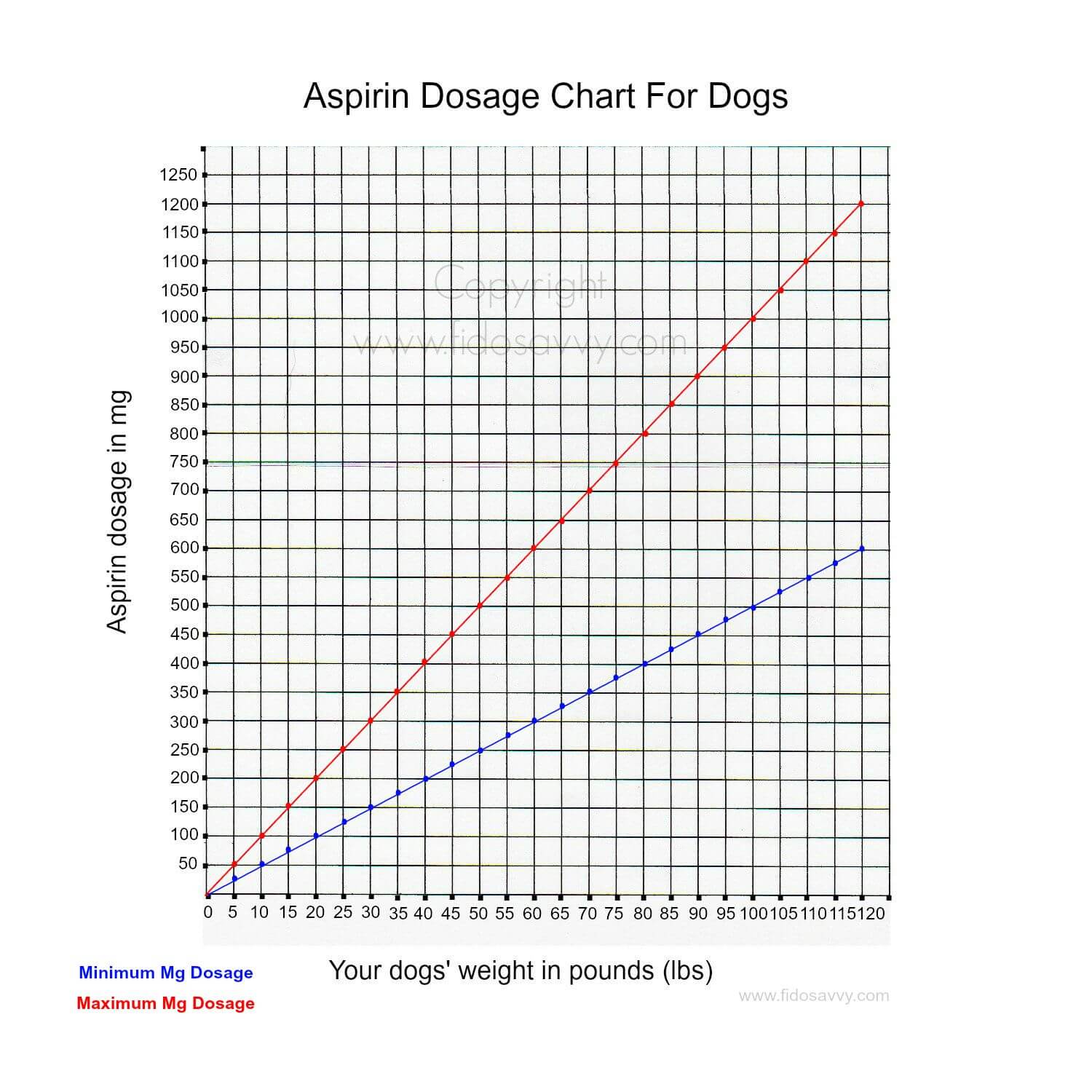
5 - 10mg per pound of body weight
(10mg per lb is usually the maximum dose, but some veterinarians will go to 15mg per lb if they feel it necessary... but I would NOT suggest doing this without your vet's specific approval).
This can be given twice a day, that's one dose per 12 hours
Always start with the minimum dosage
Anything over 30mg per pound is considered toxic & deadly!
It might help to know that a standard adult Aspirin tablet is 320mg and a baby aspirin tablet is usually 80mg.
Aspirin formulated for dogs is available in different dosages.
For small breeds you often see 60mg tablets. For larger breeds 300mg tablets are common.
It's very important to make sure that you get the dose right, especially when you're treating small/tiny dogs, and using low-dose tablets makes this easier to do.
Do not give Aspirin to puppies.
The chart below will help you find the recommended dosage of aspirin for your dog.
The blue line is the minimum dosage (always start with this) and the red line shows the maximum dosage.
For example, using the chart you can see that for a 40lb dog
- Minimum dosage would be 200mg
- Maximum dosage would be 400mg
Remember that these doses can be given twice per day if necessary.
Talk to your veterinarian first......
Before you give your dog aspirin, or any medication discuss the situation with your veterinarian first.
It's also important to find out what's causing the pain or other symptoms that make you think Fido needs aspirin.
Pain-killers will reduce his discomfort or pain, but they won't fix whatever is causing that pain - and that's something your vet will need to investigate and treat.
Side Effects Of Using Aspirin for Dogs
For most dogs there shouldn't be any appreciable side effects of giving them aspirin for a few days as long as you keep within the recommended daily dosage above.
Small or tiny dogs, and young puppies are at the biggest risk of problems and you need to be especially careful about measuring out the correct dosage (this of course applies to ALL medications) for your dog in these situations.
Minor Side-Effects
Aspirin has the side-effect of interfering with the blood-clotting process and is irritating to a dogs' stomach.
The side effects of giving aspirin to dogs are usually seen in the digestive system, but it can also affect the kidneys and liver which are involved in breaking-down and excreting the drug.
The mildest and most common ones can include:
- Lethargy
- Loss of appetite
- Loose stools or diarrhea
More Serious Side-Effects
The more dangerous side effects of using aspirin for dogs occur when the lining of the stomach, intestines or bowel is irritated or damaged.
This can cause pain and internal bleeding.
Organ damage is also a possibility, especially with long-term use, maximum dosage or overdose.
The most worrying of these aspirin side effects include:
- Vomiting - a coffee-ground texture/color could mean internal bleeding
- Diarrhea which is bloody or contains mucus
- Stools which are black or 'tarry' in appearance (a sign of internal bleeding)
These symptoms are very serious, so please get your dog to a vet right away if you notice any of them!
If you give too much aspirin, or doses too close together there is a risk of organ damage.
If this happens STOP giving him the medication IMMEDIATELY and get him examined by your vet right away.
You can help minimize the digestive irritation caused by aspirin by making sure that you never give it to your dog when he has an empty tummy.
Symptoms of Aspirin Overdose in Dogs
It's frighteningly easy to give your pet too much aspirin by mistake - either by miscalculating the dose or giving it too often.
Even a little too much can cause serious problems, especially in young puppies, small breeds or senior dogs.
Poison Control Hotlines
The ASPCA Animal Poison Control Center or the Pet Poison Control Helpline can give you advice but hands-on vet care is likely to be needed.
ASPCA Animal Poison Control Center:
1-888-426-4435 or 1-800-548-2423
Available 24/7. There may be a $65.00 (payable by credit card) for the call.
The APCC mobile app gives you life-saving info. in the palm of your hand. In an emergency every second counts. Click here to learn more or download this app: ASPCA Animal Poison Control Center Mobile app.
Pet Poison Control Helpline
1-855-764-7661
Available 24/7 Charge is $49 per incident (payable by credit card) which includes initial call and any follow up calls on the same case.
If you realize that this has happened, you need to get veterinary help immediately or your dog could die.
If your regular vet clinic is closed, get him to an emergency pet hospital or 24 hour clinic.
Prompt vet attention and the right treatment could save his life.
Some of the signs of an aspirin overdose are so mild that you may not realize anything is wrong until there's serious trouble,
Several of the signs of aspirin poisoning can also be normal side-effects which are short-lived and not dangerous, but if you're in any doubt always get vet help. Better safe than sorry.
Because of this, it's crucial to monitor and double-check dosage at all times.
Here are some of the symptoms you might see in a dog who has received an overdose of aspirin....
- Loss of appetite
- Lethargy
- Fever
- Severe vomiting, vomit may look like coffee grounds
- Severe diarrhea or black, tarry stools
- Dehydration
- Abdominal pain (may have rigid, distended belly)
- Breathing fast
- Blood loss - either rectally or orally
- Pale gums (due to blood loss or internal bleeding)
- Dizziness or loss of balance
- Weakness
- Collapse
- Loss of consciousness
Treating Aspirin Poisoning (Overdose) in Dogs
Blood tests can be used to determine the level of aspirin toxicity in your dogs' body.
This knowledge is then used to decide what treatments are needed.
There is an approximately 12 hour 'window' to get veterinary treatment started after an aspirin overdose before symptoms become severe, and potentially irreversible.
This is why it's important to be vigilant about monitoring Fidos' intake of aspirin and any side-effects he may experience.
Your vet may induce vomiting and/or pump your dogs' stomach to remove as much of the aspirin from his system as possible.
But of course, anything absorbed into his bloodstream can't be removed in this way, which is why you need to get help for your dog asap.
If any organ damage, stomach ulcers or damage to the intestines has taken place then surgery or other options may be needed.
Blood transfusions, IV fluids and other treatments might also be used.
Aspirin Alternative for Dogs
If your dog needs pain relief and you want to try a more natural product before jumping right into medication, FlexPet might be the perfect fit.
FlexPet is not a pain-killer, but is a nutritional supplement packed full of all-natural, non-GMO ingredients designed to improve your dog's joint health.


These chewable tablets lubricate joints, reduces inflammation, boost flexibility and help rebuild healthy cartilage and connective tissue.
Clinical trials have shown that the active ingredient in Flexpet, CM8, reduces pain and inflammation in dogs with arthritis. In addition, reviews from dog owners are almost unanimously positive, making this a very viable Aspirin alternative for pain relief in dogs.
Alternatively, a product which contains Turmeric (the natural source of the chemical compound Circumin) can help reduce, or even eliminate, joint pain and stiffness.


Bacon and Beef Liver flavored chewable supplements made in the USA in a GMP certified organic facility. Hypoallergenic formula.
Also benefits your dogs heart, brain, immune system and liver, and promotes healthy skin and coat condition.
Powerful, natural antioxidant.
Human Medications Which Are Safe for Dogs
There are several other human medications which are routinely prescribed/recommended by veterinarians for the treatment of a variety of dog health conditions.
It's important to get the dosage 100% correct for your dog and never to give any medication without first consulting your vet.
You can learn more about which people medicines are included in this group here... Dog Safe Human Medications
You can also find out the correct dosage for a wide variety of medications that your dog may be prescribed, including OTC products.
you might also like...




FTC Disclosure: Some pages on this site contain affiliate links. I may earn on qualified purchases.
FTC Disclosure: Some pages on this site contain affiliate links. I may earn on qualified purchases.
For your peace of mind, puppy and dog health information on this site has been approved by veterinarian Dr. Megan Teiber, DVM


Tired of Dog Hair everywhere?

These pet hair removing tools have saved my sanity! You can remove dog hair from carpets, rugs, furniture and more SO EASILY. If you think your rugs are fur-free... run one of these babies over them AFTER you've vacuumed. You will me amazed at how much hair was still there.
There's even a deshedding tool to use on your dog before he deposits his fur all over the house. Win-win.