FYI: If you buy something through a link on this site I may earn a commission - at NO extra cost to you.
Bringing Home A New Puppy
Bringing home a new puppy is always exciting, even magical, and no doubt about it, you're going to have a lot of fun together. But lack of planning, preparation or puppy care experience can make those early days stressful too.
I've raised a LOT of puppies and I know how easily high hopes can turn into worries or even frustrations.
I designed this page to help you negotiate those early 'ups and downs' and cope with the unexpected..... and there will always be the unexpected, puppies are experts at it!
Raising a puppy takes lots of preparation, practice and patience, plus a good dose of common sense. The good news is that if you do it right, this just might be one of the best experiences you ever have!
You can use these quick links to jump to:
- Getting ready for the new arrival
- The 'Big Day'!
- Puppy behavior & what to expect
- What comes next
- Some of the unexpected realities of new puppy ownership
Preparing For Your New Puppy
If you can plan for your new puppy's arrival in advance of the 'big day' you're already a step ahead of the game.
It will give you a chance to consider which is going to be the right dog breed and visit breeders to see their adult dogs and any puppies they have available.
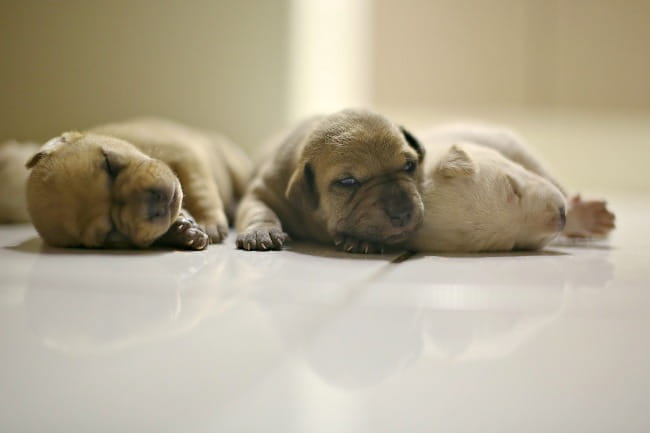
All dogs are different, and taking the time to think about what you want from a dog, and what you can give him, is a big step towards a long and happy relationship.
All sorts of things can factor into choosing a puppy, from needing a pup who's less likely to trigger allergies in family members, to wanting a breed that's good with kids and it's really worth the effort to get it right.
You'll also have a chance to puppy-proof your home and buy all the must-have puppy supplies ahead of time. You don't need to spend a fortune on puppy products and equipment, but you DO need the basics, then you can add to those as your pup grows and your budget allows.
Oh, and it's a great idea to have a few puppy names picked out before home a new puppy.

But, of course life is unpredictable and you might have bought or adopted your new puppy on the spur of the moment for any one of a hundred different reasons, it happens a LOT (and I've done it too).
Don't worry though, you can still catch up - you'll just be tripping over your new puppy as you go!
If you are bringing home a new puppy by car, make sure you're prepared for all eventualities! Some puppies get car-sick, and an old towel, some kitchen towels, wet wipes and a bottle of water are good to have on hand. If you can put your puppy in a crate that's the safest way for him to travel. If it's small enough you can put the crate on your lap so that he feels less scared because he's close to you.
Your new arrival probably won't have had more than one set of puppy vaccinations if he's young, so don't allow him access to any public areas where other dogs may have been.
He could pick up one of the serious, or life threatening dog illnesses that puppies are so vulnerable to.
To get a good idea of what's involved in caring for your new furbaby, check out my Puppy Care 101 page. It will help you get off on the right foot.... and paw :)
The BIG DAY!
On the big day when you bring your new puppy home it's difficult to be calm... you and your family are excited, the puppy is adorable, and all is right with the world!
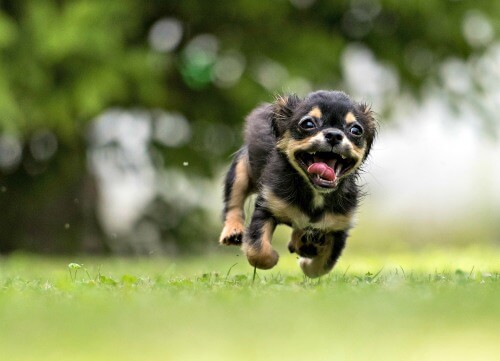
But remember, your puppy is a tiny baby, he needs love, attention and playtime - but he also needs lots of peace and quiet, naps and potty breaks.
That's a lot of 'needs' isn't it? Luckily most of them are very easy to meet, but there might be some that you haven't thought of.
If you check out my What Do Puppies Need? page you'll be prepared for everything, and both you and your new baby will feel happier.
When you get home and BEFORE you bring your new pup into the house, take him to his 'potty spot' outdoors right away and let him relieve himself. This helps him to get started on his potty training right away, and your life together doesn't begin with cleaning up a puddle (that will come later!)
Once you take him indoors you can let him explore his new surroundings at his own pace. It's very important to supervise him at all times, even if you've 'puppy-proofed' your home to the max, he might surprise you!
Do NOT allow him to have full access to the house to begin with, it will hamper his housebreaking and be confusing and maybe a little scary for him too. Instead either use a puppy play-pen or exercise pen to contain him, or use baby-gates on doorways to limit his access to your rooms.
Start crate training right away, but don't expect your puppy to like it right off the bat. Begin with short periods in the crate, but be sure to ignore any crying and whining he does when he's in there. The lessons he learns early will stick around, I promise!
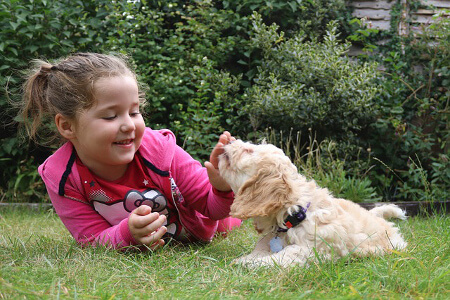
If you have children, encourage them to be very gentle and quiet around the new puppy to begin with. A new puppy can get children over-excited, and this will overstimulate your new arrival too.
If you already own a dog, be prepared for a little bit of jealousy and perhaps a bumpy ride during the first week or so. Usually it's best to add a pup of the opposite sex as it reduces the risk of fighting between the two as the puppy reaches adolescence and adulthood.
Check out my Introducing A New Puppy to the Family Dog page for lots of tips and advice on handling those first few days, and how to help everyone to get along.
Once he feels more at home, in a few days or so, he may well thoroughly enjoy some rough-and-tumble (supervised of course and within reason), but now is not the time!
Your pup should have his crate inside his playpen/special room and be allowed to spend plenty of quiet time there for the first few days.
I highly recommend that within 24 hours of getting your puppy, that you take him to the vet you've chosen.
This is important because you need to make sure that he's healthy, that there are no underlying health issues that you are not aware of, or that need treatment, and that he's up to date with his vaccinations and been treated for worms.

If you've bought a purebred puppy from a reputable breeder, you will likely have a health contract. Honoring these on the breeders behalf, usually depends on the puppy being examined by a vet within 24 hours of your taking possession of him. This is just a good, common-sense practice.
Regular preventative care, and getting help early if you even think your puppy might be sick can save you both a lot of trouble! There are all sorts of common puppy health issues that might crop up, so stay alert and get professional help if you're ever in doubt.
One other important thing to think about when you're bringing home a new puppy is the cost of veterinary care if he ever needs more than just the usual preventative care (and chances are he will).
Injuries, accidents and serious illness do happen (even though we always hope they won't happen to us, or the ones we love), and veterinary costs just keeps going up and up.
To make sure you can afford whatever care your puppy might need in an emergency, or crisis, I strongly recommend getting him some pet health insurance.
Although you might think your puppy doesn't need insurance because he's perfectly healthy, this is actually the perfect time to get coverage for him and makes much more sense than waiting until he's older, sick or has developed an expensive health problem.
Most plans don't cover pre-existing conditions, so you need to get your puppy insured now if you want to make sure you can protect him later. There are now some very comprehensive, but affordable, options and they can be a lifesaver... literally.
To learn more about how pet health insurance works and why it's such an important part of keeping your pup (and dog) healthy, check out my Dog Health Insurance Guide. Then take a closer look at how to pick the best pet health insurance policy for YOUR dog, one that fits your needs and your budget.
What's Normal Behavior For A New Puppy?
After bringing home a new puppy, you might be confused by his behavior during the first few days.
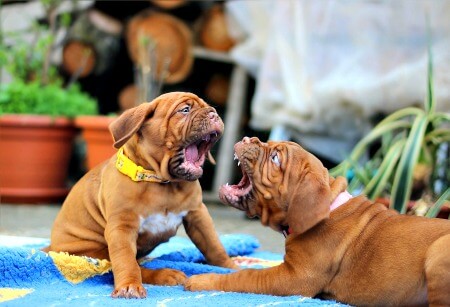
If you're a first time puppy owner, or it's been a while since you had a young 'un in the family, things can seem to be going off the rails when in fact what you're seeing is perfectly normal puppy behavior.
So, here's a look at some of the situations you might find confusing, worrying or frustrating...
Nipping & Biting
All puppies bite, nip and 'mouth' - usually your hands, toes, and clothing are prime targets for this these antics.
Although it's normal, you do need to discourage your little one from biting or it can become a big problem as he grows.
To find tried-and-tested tips and techniques to stop puppy biting click here!
Personality Changes
You might see some personality changes during the first few days.
A pup who was bold and outgoing when with his siblings, may suddenly seem quiet and withdrawn. He may not want to eat much, and not seem interested in playing with his (truckload!) of new toys. This is all perfectly normal.
Remember he's just left his canine family and come into a totally new environment, with new people, and he's probably scared, lonely and anxious... even a bit homesick. So his behavior is totally understandable, even if you weren't prepared for it.
Many puppies seem to 'withdraw' into themselves, sleeping more than usual, losing their appetite and generally not behaving the way you expect. This generally only lasts for a few days, maybe a week, and then you will begin to see your little one's true personality emerge.
If you start off with what seems to be a calm, laid-back pup - you could find that within a week you have a 'whirling dervish' on your hands, so don't be surprised at the metamorphosis - be ready!
Anxiety
When bringing home a new puppy it's normal to see a bit of anxious, nervous behavior at first and some breeds, or individual pups, have highly-strung personalities and get upset easily.
Some puppies seem to get so stressed that they don't feel the need to poop (or even pee) for a while! Although a young pup generally has very limited bladder/bowel control, it's not unheard of for a pup to 'hold it' for several hours (as many as 8 - 10).
This is instinctive rather than something he's choosing to do, so don't panic if your new baby doesn't poop or pee right away. But, make sure you are watching him to make sure that he's not sneaking off to pee behind the sofa or under the bed in the spare room without you noticing.
Luckily there are simple things you can do to help your new family member feel more confident and settle in quickly.
Check out this page for lots of tips and advice on this.... How To Help A Scared Puppy.
If your new puppy whines and cries whenever you're out of sight don't be afraid that he's neurotic or that there's something wrong with him - or with the way you're taking care of him. He's just scared and missing his momma and litter-mates. All his instincts are telling him that he needs to be right next to you at all times to be safe.
Although this is normal, it's not a good idea to let your little one be attached to you at the hip at all times either.
He needs to learn that it's okay to be alone for short periods, and that you always come back for him. If he doesn't learn this as a puppy he may grow into a clingy, anxious dog with real separation anxiety.
Some crying, complaining, whining and howling when crated is normal (see this page for how to handle this) but if Fido becomes totally hysterical when crated/left alone, loses control of his bladder/bowels and acts in a way that could cause him injury then he may already be showing signs of puppy separation anxiety and you'll need to address it early on.
There's a neat product that can help your puppy feel less alone at night time, it's called a 'SnugglePuppy'. This is a plush, stuffed puppy that comes complete with a battery-operated heartbeat and two sources of gentle heat.
For a real live puppy who's just left his momma and littermates this is like a little piece of home and can be very soothing.
It's important not to allow your pup to chew on the 'fake' puppy for safety reasons, but most pups will simply snuggle up to it - just be aware that it's not a toy and if your new baby treats it like one then you will need to take it away.
Puppy Behavior & Illness
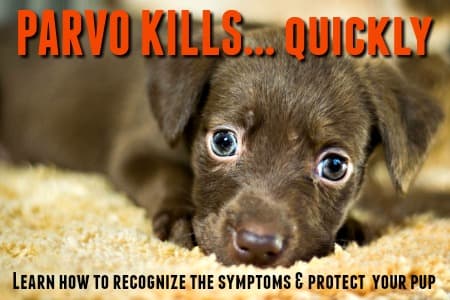
Young puppies are very prone to catching certain diseases, some of these (like Parvo or Distemper) can be fatal.
Some of the symptoms of homesickness as I've described above, can also be early symptoms of illness.
Here are the 3 most common signs of illness in puppies:
- Repeated or severe diarrhea
- Repeated vomiting
- Extreme lethargy
While homesickness can cause a loss of appetite and 'sleepiness' and a sudden change in diet can cause diarrhea, these are generally not as severe in nature as they are with true illness.
A sick puppy will also often have dull eyes and can't be tempted to take tasty treats, or play for longer than a couple of minutes, if at all.
But obviously, for a new (and possibly inexperienced) dog owner, it can be difficult to tell whether a puppy is truly sick, or just homesick.
You can find more help to figure out if your puppy is sick or not on my Got A Sick Puppy? page.
However, if you're in any doubt at all, I'd strongly recommend taking your puppy to your veterinarian.
Chewing On Everything!
Another very common puppy mis-behavior is chewing everything in sight! Puppies LOVE to chew, and they're of the opinion that everything is edible until proven otherwise!
Chewing fills basic canine needs and you can't (and shouldn't) stop your pup from chewing - but you do need to make sure he only exercises his jaws on appropriate chew toys.
The good news is that all this chewing stuff usually peaks during the teething phase, and then diminishes slowly as long as you've been consistent about corrections and providing guidance and toys.
Because puppies NEED to chew, providing sturdy chew toys is hugely important. The original Kong classic dog toy is one of the most durable toys I've ever found, and every puppy or dog I've ever owned has enjoyed a stuffed kong... and if you stuff it, then freeze it, the play value for a puppy is significantly longer than most other chew toys. I have some healthy, tasty Kong stuffing ideas for puppies (and dogs) HERE ... plus some tips on choosing, and filling a Kong.
Why is my puppy breathing so funny/fast?
One other thing that seems to worry owners who are bringing home a new puppy, is the way their puppy breathes!
If you've had a baby, you'll probably remember that they tend to breathe a bit erratically at first, especially when they're sleeping. Well, new puppies do this too.
It's not unusual for a sleeping pup to breathe very fast, or to seem to 'stop' breathing for a few seconds, or to cry, whine, twitch or even bark in their sleep.
All of this is perfectly normal. If your pup is stressed or anxious (which he/she is likely to be during the first couple of days or so), then he may breathe extra-fast when awake as well, or even pant or shake a little - again normal.
You can read more about this, and learn when your puppy's breathing could mean that there's a problem on my Why Is My Puppy Breathing Fast? page.
BUT breathing problems which happen when a puppy is awake, or are accompanied by severe lethargy, weakness, dizziness or disorientation are quite different and needs veterinary attention!
After Your Puppy's Arrival
After the early excitement of bringing home a new puppy, the reality can be a bit of a challenge.
Puppies are living creatures not cute cuddly toys and, just like human babies, their needs can seem a bit overwhelming at first.
The average 8 week old puppy will need a potty break approx every
30 minutes to 1 hour during the day, and at least once (probably twice
at first) during the night.
He'll also need to be supervised whenever he's not in his crate or playpen, and can't be left alone, unattended for long periods.
To make sure that your adorable little furball, grows up to be a friendly, well adjusted and well behaved adult, make sure that he gets plenty of socialization, learns basic manners and commands and attends some dog obedience classes.
Obviously a puppy's growth and development moves at a faster pace than that of humans, but you still need to deal with the 'baby, toddler and adolescent puppy behavior' before your cute puppy becomes a mature adult.
Each of these stages has it's own joys and problems, but if you're armed with the correct knowledge and advice, you will be able to weather them with ease (or at least without tears!).
To learn more about taking care of your new pup, visit my New Puppy Checklist page for an easy-to-read guide.
New Puppy? expect the unexpected!
Many new owners think they're prepared for life with a puppy, only to find out pretty quickly that the reality of new puppy ownership can be unexpected!
Being prepared is half the battle, so here's a quick look at the most common concerns and questions that can take you by surprise:
My new puppy hasn't pooped since I brought him home!
This is pretty common and usually it's nothing to worry about. Your new pup is stressed and anxious in his new home and his digestive system can slow down a little. Some puppies don't even pee for the first 12 hours or so! Nature will take it's course and as long as your puppy doesn't seem to be sick don't stress about little Fido's lack of pee/poop right away.
My puppy does nothing but sleep all day. Is this normal?
Puppies are babies, and the definitely need a lot of sleep (experts say around 18-20 hours per day is average for an 8 week old puppy). Sleeping time is when a lot of their physical and mental development happens so it's important. However, during the first few days in a new home your puppy may use sleep as an 'escape', a way to shut out this scary new reality he's not sure what to make of. The stress of the change also exhausts him mentally, so sleeping a LOT can happen during the initial adjustment to a new home. However puppies are all different and once comfortable in his new home Fido may, or may not, sleep an average amount. That relaxed pup you had to begin with could be a whole different kettle of fish next week!
My puppy won't let me out of his sight and cries if it happens. Help.
Your little pup has lost the only home and family he's ever had. He's scared and you are the constant that he needs around to feel safe. This is totally normal and for the first day or two I don't fight this too much. But he does need to learn that it's okay to be on his own, so spending short periods alone is important too. He will cry, and that's okay, he'll soon learn you always come back. A pheromone diffuser in the room he spends time alone in, or a pheromone collar, can help calm him too. It's tempting to keep your new baby right by your side but you don't want to have a 'velcro puppy' because that can lead to separation anxiety issues.
My new puppy pees/poops indoors immediately after his potty break.
Potty training is a whole new phenomenon to Fido, he has zero idea what you want and follows his body's bidding regardless of where he is. Puppies often pee or poop several times during one potty break, and if you're not there to supervise him while outdoors he is likely to spend his time sniffing and exploring rather than doing his business. Potty training your puppy is pretty straightforward but it's important to get it right, right from the start to minimize accidents.
Is it normal for a new puppy to want several potty breaks overnight??
Actually, yes it is! Having a young puppy is like having a newborn baby, and broken nights are a fact of life with both. One or two potty breaks per night is fairly average. But don't despair, this does settle down fairly quickly and somewhere between 12 and 16 weeks you may find that your pup can go through the whole night (well, maybe 11:00pm - 5:00 am ish).
I was so excited to get my puppy, but now I'm having second thoughts...
There is a lot of excitement and expectation around adding a new puppy to your home/family, but the demands, responsibility and exhaustion that new puppy ownership entails can sometimes overshadow the joy. For a while. Puppy depression, aka the puppy blues, is much more common than most people realize. The good news is it's just temporary, and there are things you can do to help prevent it from raising it's head, and to feel better if it's already hit you. Given time this stage will pass and you'll have the relationship you've always wanted with your pup.
you might also like...



FTC Disclosure: Some pages on this site contain affiliate links. I may earn on qualified purchases.
FTC Disclosure: Some pages on this site contain affiliate links. I may earn on qualified purchases.
For your peace of mind, puppy and dog health information on this site has been approved by veterinarian Dr. Megan Teiber, DVM

Tired of Dog Hair everywhere?
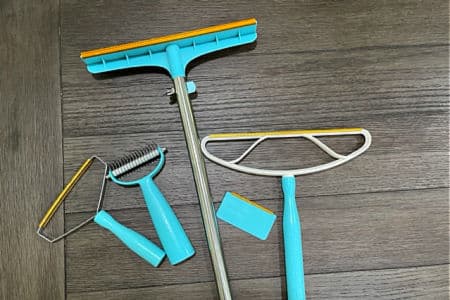
These pet hair removing tools have saved my sanity! You can remove dog hair from carpets, rugs, furniture and more SO EASILY. If you think your rugs are fur-free... run one of these babies over them AFTER you've vacuumed. You will me amazed at how much hair was still there.
There's even a deshedding tool to use on your dog before he deposits his fur all over the house. Win-win.