FYI: If you buy something through a link on this site I may earn a commission - at NO extra cost to you.
Complete Guide To Choosing A Puppy
Choosing your puppy is a big moment and I know how hard it is to be patient when you're sooo ready to add that new little furball to your family.
BUT, rushing out to the local pet store, or checking out the
classifieds and dashing off to buy the first little pup that chews on
your shoelaces is not a good idea!
You're not just adding a puppy to your family, you're adding a dog, and he - or she - is going to be with you for anywhere between 10 and 15 years (give or take).
That's a big chunk of time, and a serious commitment, so it's easy to see how important it is not to rush things.

So, how can you ensure that you and your Fido have the best possible chance of living happily-ever-after?
It's pretty simple really..... just put in a little extra time and effort at the 'planning' stage
How To Choose The Right Breed
Unless you've owned different breeds of dog before you might think all dogs are just, well.... dogs!
Of course they ARE all the same species and are put together in the same basic way - 4 legs, a wagging tail, a tongue made for licking and the ability to bark, whine, bite, chew and enjoy belly rubs!
But it's important to remember that each breed has it's own very specific 'look', personality and needs, and so do you and your family members.

Here are the things to think about and consider when you're making a short-list of breeds:
- Size of your home
- Access to a fenced yard
- Family members (especially children and their ages, frail or elderly relatives)
- Your activity level
- Your families leisure activities
- Amount of time you have to spend with your pet
- Plans for the pup (working, hunting, agility, obedience, companion etc.)
- Breeds that you are especially drawn to
- Your finances (large breeds cost more than smaller ones to raise. Find out more about the cost of dog ownership right here)
Here are some pages where you'll find tons more tips and information to help you make the right choice....
And don't forget that purebred dogs aren't the only kind of canine companions!
There are lots and lots of mixed breed pups looking for loving homes and they're just as loving, loyal and intelligent.
When it comes to health, a mixed breed puppy is also usually stronger and isn't burdened by the hereditary health problems that many purebreds carry.
There are many ways to find a mixed breed pup who needs a home, but avoid puppy mills and pet shops (who often buy from puppy mills!).
And last, but definitely not least, remember that thousands of dogs of all ages, sizes and breeds are waiting patiently in pounds and rescue societies for their 'forever family' to find them.
Adopting a pup/dog from one of these rescue organizations gives a lonely pooch (who may have a short life-span if not adopted) a chance at a happy life with the love and attention he deserves.
In my experience it's often a very special relationship too - rescued dogs seem to know when they've been given a second chance and reward their new owners with bucket-loads of that unconditional love that dogs are so famous for!
Choosing The Right Puppy From A Litter
Once you've got as far as looking at a litter of puppies, it gets even trickier because it's almost impossible to look at a jumble of chubby, squirming little pups without taking one home with you!

So your most important task now is choosing a puppy who's healthy and who has the personality/temperament that you're looking for.
ALL puppies are adorable and pretty much irresistible so you need to try really hard to be practical and as unemotional as possible at this point... not easy, I know!
Taking home a sickly puppy is a recipe for high vet bills and possibly a lot of heartache - and it's not a good idea. Routine vet care is necessary to keep a pup healthy and keep parasites and disease at bay.
Luckily there are some easy-to-spot signs that a puppy isn't well, or that he hasn't been given the health care he needs.
I'd recommend taking a look at my Choosing A Healthy Puppy page to learn how to recognize a healthy, well-cared for pup... and get tips on keeping him that way once you get him home.
Picking a pup who hasn't been properly handled or socialized, one who is extremely anxious/scared or one who's at the opposite end of the personality scale and seems intent on bullying his/her littermates - or any other animal or human who comes their way - is also a bad way to start out.
Puppies learn a lot from their momma and littermates and need to stay with their doggie family for at least 8 weeks to get the benefits of this important canine education.
If a breeder tells you that a 5 or 6 week old puppy is 'ready to go because the momma has stopped feeding them' or for any other reason, then the DO NOT have the puppy's best interests at heart.
Dogs start weaning their puppies at somewhere between 3 and 4 weeks of age (it's a normal step in puppy development), and at that point the human 'momma' needs to step in and introduce solid food.
For backyard breeders and puppy mills this means spending money on puppy food and putting in some effort and they prefer to sell the pup at that point.
It's not good for the puppy and a sign that you've not chosen a reputable, responsible breeder.
Choosing Your Puppy - Male Or Female?
I've owned many dogs over my lifetime. Dogs of all ages, sizes, breeds and personalities - and of both sexes.
And I can honestly say that I don't think either sex is better/easier/quieter or any other adjective you care to throw out there!

With humans, it isn't whether someone is male or female that's the most important determining factor in terms of influencing their personality, behavior, intelligence etc. It's the same way with dogs.
Personality and temperament are much more products of your puppy's genetics and upbringing than they are his sex.
But there are some practical differences between male and female pups and it pays to think ahead and consider these when you're choosing a puppy.
Here are some of the 'biggies'....
- Once they've reached sexual maturity female dogs come into season
between one and three times per year (depending on the breed as well as
the individual dog). This is not a problem for the dog, but it can be
for you! Her 'season' will last approximately three weeks, and for at
least part of that time she will bleed. If you have nice carpets and
furniture, and/or she will be sleeping on your bed, it can be quite a
challenge to keep your possessions from being ruined.
- There are 'doggy-diapers' that she can wear specifically for this
purpose, but she will need to get used to them early on or she's likely
to rip them off before you can say 'carpet shampoo'. Then there's the
problem of repelling (and protecting her from) all the neighborhood
Romeos who will be vying for her attentions. Dogs (of both sexes) can
get very creative when it comes to finding ways to satisfy their natural
urges - it is not unheard of for females to be impregnated through
chain-link fences!
- When you're choosing a puppy bear in mind that it's not just the
females that have issues. Male dogs come with their own set of problems.
One of which is the fact that an un-neutered male will get the urge to
visit any fertile female within walking distance (and you'll be
surprised how far he can walk when Fifi is sending her pheromones his
way!). Intact males are also far more likely to get into dog fights as
the attempt to prove to all contenders that they are, indeed, 'the man'
(or at least 'the dog').
- If you have a mixed breed dog, or if your purebred is not
destined for the dog show ring (and perhaps a momma or daddy), I
strongly recommend that you spay or neuter your pup.
- Another problem is the male dog's habit of 'marking' or
'spraying'. This is when a dog sprays urine on anything he considers to
be his property. In the dog world, this is a clear signal to other dog
to stay away, and Fido may feel it necessary to spray every tree,
rosebush, fence-post and corner of your house in order to make his
point.
- This is OK outdoors, but can cause problems if he decides to
treat your sofa, bedframe, dining table and front door the same way!
However if you housetrain him early (spraying doesn't really surface
until adolescence or early adulthood) you have a good chance of reducing
or eliminating the problem when it arises.
- Showing him, both kindly and consistently, that this behavior is not OK with you should get the message across - and confine his macho display to your yard (and the occasional fire hydrant or lamp-post of course).
At the moment I have loud, bossy females (with one notable exception) and teddy-bear males, but on many occasions it's been the exact opposite.
Once Your Puppy Is In Your Arms.....
So, you finally took the plunge and picked out the perfect puppy - and now you're on your way home with him/her curled up on your lap.

But wait... what do you do now?
- Do you know what to expect in terms of your puppy's development or behavior?
- Do you know how to keep him healthy?
- Or well fed?
- Or happy?
If not, don't panic. You can find everything you need to know on my website, starting on my Puppy Care page. Best of luck with your new puppy!
you might also like...



FTC Disclosure: Some pages on this site contain affiliate links. I may earn on qualified purchases.
FTC Disclosure: Some pages on this site contain affiliate links. I may earn on qualified purchases.
For your peace of mind, puppy and dog health information on this site has been approved by veterinarian Dr. Megan Teiber, DVM


Tired of Dog Hair everywhere?
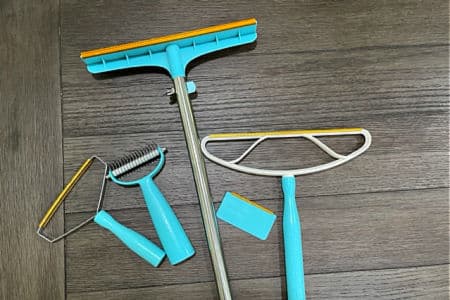
These pet hair removing tools have saved my sanity! You can remove dog hair from carpets, rugs, furniture and more SO EASILY. If you think your rugs are fur-free... run one of these babies over them AFTER you've vacuumed. You will me amazed at how much hair was still there.
There's even a deshedding tool to use on your dog before he deposits his fur all over the house. Win-win.