FYI: If you buy something through a link on this site I may earn a commission - at NO extra cost to you.
Puppy FAQ's... And The Answers You Need
This Puppy FAQs page is designed to help you find the answers to some of your most common puppycare questions quickly and easily.
It's part of my commitment to helping all new owners figure out how to take the best possible care of their new 'baby' and to spend more time enjoying their pup rather than worrying about him/her.
I've covered all kinds of topics here, from routine health care, diet, housebreaking, training, common behavior problems and more.
You can either scroll down the page to read each Q&A entry, or use the Quick Links below to jump straight to whichever topic you're most interested in.
- What shots does my puppy need?
- What's the best way to housebreak a puppy?
- How do I choose the best puppy food?
- How can I get rid of dog urine odor and stains
- Does my puppy have worms and how do I treat them?
- What do I do if my puppy has diarrhea?
- How do I help my constipated puppy?
- How can I train my puppy properly?
- How can I introduce the new puppy to our resident dog?
- My dog howls and destroys stuff when I'm out, what can I do?
- Why is my puppy always scratching and/or licking himself?
In each section, you'll also find links to other pages/articles on my site that discuss each topic in more detail, so that if you need more help it's easy to find it.
What Shots Does My Puppy Need?
When it comes to puppy FAQs, puppy shots is a hot topic! Your puppy needs 3 sets of DHLPP puppy shots. The first set are usually given at approx. 7 - 8 weeks of age, and there is a 3 weeks period between each set.
The DHLPP puppy shot is a combination vaccine that protects against 5 separate diseases :
- Distemper
- Hepatitis
- Leptospirosis
- Parainfluenza
- Parvovirus
For more information on everything to do with puppy vaccinations see my Puppy Shots page.
What's The Best Way To Housebreak A Puppy?
This is another oft-asked question!
The simplest and easiest way to housebreak your puppy, is by using a crate. Crate-training works WITH your puppy's natural instincts and helps speeds up the whole potty training process.
Any puppy of 8 weeks of age or older can begin crate-training.
You can find out how to choose the right size crate, how to introduce it to your puppy, and exactly how this method of housebreaking works on my Crate-Training page.
You'll also find lots of helpful advice on housebreaking in general on my Potty Training page.How Do I Choose The Best Puppy Food?
What you feed your puppy now has a direct effect on his future health, growth and development, so it's not surprising that I get asked a LOT of questions about diet and puppy food.
Choose puppy kibble that has the wording 'a complete and balanced diet' on the package. This shows it meets the standards set by the AAFCO (Association of American Feed Control Officials).
You need to be sure the dog food you pick has a good source of high quality protein as it's first ingredient. Chicken or Lamb are both good choices.
Puppies grow very rapidly, and to support that growth they need a diet high in protein, fat, vitamins and minerals.
Protein values should be around 25% plus and fat around 15%. If you have a large breed or small breed puppy, look for a puppy food that is especially designed to meet their specific requirements.
How Can I Get Rid Of Dog Urine Stains & Odor?
Even when potty training is going smoothly, there will be times when your puppy has an 'accident'. It's one of those 'puppy FAQs of life'.
To avoid having your carpets ruined you need to act quickly, and tackle those puddles in the right way.
To be effective, you need to blot up any liquid that is in your carpet. Then you need to rinse the area well with clean, cool water and blot that up too.
Follow this with an application of an enzymatic-based cleaner/odor remover. Allow this to soak into the carpet for at least 10 minutes and then blot up the excess. Allow area to dry thoroughly.
You may need to repeat this process more than once.
For more information on how to keep your carpets stain and odor free, and find out which product REALLY works, see my Dog Urine Cleaning and Best Dog Urine Cleaning Products pages.Does My Puppy Have Worms & How Do I Treat Them?
A huge percentage of puppies have worms and if you're a new puppy parent, it's something you may well have to deal with.
Some worms can be seen in your dog's feces, and in severe cases of roundworm infestation your pup may even have worms in his vomit. Other symptoms of worm infestation include a round, distended belly, a dull, rough coat or a cough.
Although very common, worms can make your puppy quite sick...at the very least he'll feel and look 'out of sorts'.
You will need your veterinarian to diagnose and confirm the infestation, and the type of worm involved. They will then prescribe, or administer, the appropriate de-wormer. Do not use over-the-counter medications as they can be ineffective at best, and harmful at worst.
Heartworms are a different story, but you are unlikely to find these in a young puppy.
You can learn more about worms, causes, symptoms and treatments on my Puppy Worms pageHelp - My Puppy Has Diarrhea!
This is one of those questions where it's not necessarily easy to figure out the answer without veterinary help.
Diarrhea in puppies is very common and can be a sign of a simple tummy upset due to a change in diet for example - or a deadly serious illness such as Parvo.
If your puppy has diarrhea that looks has the consistency of chocolate pudding, but otherwise seems okay, chances are he's eaten something he shouldn't.
If he's not vomiting, is alert, playful and bright-eyed you can probably afford to wait and see for a while. BUT if he's not feeling better within 24 hours, or seems to be getting worse, call your veterinarian right away.
If your puppy's diarrhea is severe and watery, he's vomiting and/or seems lethargic, has dull eyes and looks like he feel unwell you need to get in touch with your veterinarian right away.
If it's after hours you should contact your nearest 24 hour emergency pet clinic. This could be a life-or-death situation.
How Can I Help My Constipated Puppy?
Puppies can get constipated from time to time, and often it's the small/tiny breeds that have trouble.
There are many reasons why a puppy can get constipated, and these from medical conditions to hairballs (and everything in between!).
There are a few simple things you can do to treat the problem, and to prevent it happening again. A correct diet, plenty of fluids and a good amount of exercise are all vital to a healthy digestive system.
Find out more about preventing and treating puppy constipation on my A Constipated Puppy page.How Can I Train My Puppy Properly?
If you want your precious little puppy to grow up to be a well-behaved companion, you need to teach him or her some manners, and some basic obedience commands.
A fair number of puppy FAQs center around puppy behavior, and learning what behavior is acceptable and what isn't should be some of his earliest lessons!
If you want your pup to understand what you expect of him, there are three simple steps that you MUST follow :
- tell your puppy what you want him to do
- help him to perform that behavior
- reward him with treats and/or praise when he is successful
Several short training sessions per day are much better than one longer one because you want him to enjoy his trainings sessions and think they're a fun part of his day.
The first thing to teach your little one is to recognize his name. After that, the basic obedience commands that you want your pup to teach him are "sit", "come" and "down". You can read more about this on my Puppy Training PageHow Do I Introduce My New Puppy To The Resident Dog?
Most dogs learn to get along with a newcomer (and some super-sociable souls accept them right away), but if your older dog is treating the new baby with something less than unbridled enthusiasm he won't be the first to do so!
When choosing a new dog to integrate into your family, it's best to choose one of the opposite sex to the resident dog. Two same-sex dogs are less likely to get along as adults, especially if they're not neutered/spayed.
Also consider size and temperament, an older dog with a high prey drive may not be the best match for a puppy from a tiny, fast-moving breed such as the Yorkshire Terrier.
Make the initial introductions under supervision, and expect some hesitation on the part of either pooch.
Always remember to show lots of affection to your older dog.
It's sometimes difficult to tear yourself away from an adorable new puppy, but make a point of greeting, feeding and petting the older dog first, as it reinforces his status (in both his eyes, and the eyes of the new puppy) and helps to maintain a natural transition into the 'pecking order'.
You can find more detailed information on handling these introductions on my Introducing A New Puppy page.My Dog Barks & Destroys Stuff When I'm Out - What Do I Do?
Does your puppy or dog drive the neighbors crazy with his barking and howling? Does he try to remodel your home (maybe by chewing holes in the walls/door, or destroying carpets and furniture) while you're out?
If so, chances are he's suffering from separation anxiety. There are levels of separation anxiety, ranging from mild distress to
hysteria (on the part of the dog, not you. Although the sight of your
Persian rug in tatters has the potential to trigger a hysterical
reaction!).
Puppies can be scared for a number of reasons, or experience separation anxiety.
There are all sorts of treatments for this problem, depending on the level of anxiety, what's triggering it and how old he is.
Everything from simple herbal products, calming CD's, or behavior modification training can work.
By using one, or a combination of treatments, you should be able to lower your dogs' anxiety levels and teach him that it's okay to be left alone for a while, and that you always return.
To find out more about how you can help your pet overcome his fears and bring peace back to your home, check out my Dog Training For Separation Anxiety and Dog Separation Anxiety Medication pages.Why Is My Pup Always Licking/Scratching Himself?
Constant licking and/or scratching and red, itchy skin or hair loss are all signs of dog allergies.
I think it's important to point out in this Puppy FAQs page that dogs suffer from allergies just as people do!
There are many different causes and triggers for dog allergies, but most result in skin problems and a variety of allergies
These include:
- Flea allergy
- Inhalant allergy
- Dog food allergy
- Contact allergy
There are many, many different ways to treat allergies in dogs, and of course the treatment depends on the trigger!
you might also like...


FTC Disclosure: Some pages on this site contain affiliate links. I may earn on qualified purchases.
FTC Disclosure: Some pages on this site contain affiliate links. I may earn on qualified purchases.
For your peace of mind, puppy and dog health information on this site has been approved by veterinarian Dr. Megan Teiber, DVM

Tired of Dog Hair everywhere?
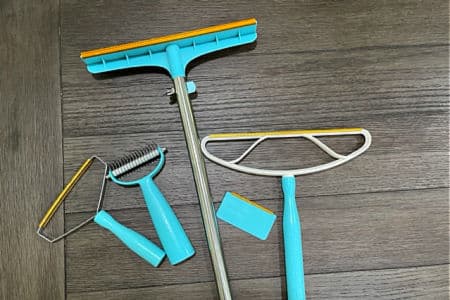
These pet hair removing tools have saved my sanity! You can remove dog hair from carpets, rugs, furniture and more SO EASILY. If you think your rugs are fur-free... run one of these babies over them AFTER you've vacuumed. You will me amazed at how much hair was still there.
There's even a deshedding tool to use on your dog before he deposits his fur all over the house. Win-win.