FYI: If you buy something through a link on this site I may earn a commission - at NO extra cost to you.
Dog Training For Separation Anxiety
Dog training for separation anxiety involves using tips & techniques that will help to reduce your dog's fear of being left alone and the stress that puts on him, and everyone who loves him.
Dogs with separation anxiety can become hysterical when left alone
and cause damage to your home, and to themselves. Plus, YOU feel
terrible about leaving him and frustrated by effects of his 'issues'.
Luckily, there are lots of things you can do to help a dog who's overly anxious or fearful when left alone.
On this page you'll find some simple dog training tips and behavior modification techniques that I hope will help you find the best way to handle your pups' fears so that everyone feels better.
If you want to learn more about dog separation anxiety itself, check out this page where you'll find lots of information the causes of this condition, pluse the most common signs and symptoms which could indicate your dog is more than just a bit nervous about being left alone or crated.
Managing Mild Dog Separation Anxiety
A mild case of anxiety when left alone can usually be taken care of pretty easily with a few simple tips. In fact, sometimes what's thought to be mild separation anxiety, is in fact just a case of boredom and lack or exercise (both mental and physical). No real training required for this, more just practical management.

If
your pup isn't a 'Velcro dog', hasn't shown any significant personality
changes, and seems generally more excitable than agitated, there's a
good chance his 'acting-out' and over-excitable behavior is due to
boredom.
This overload of nervous energy can easily be taken care of by giving your pup at least 30 minutes of vigorous exercise twice a day, and practicing some basic obedience commands.
Here are a few things to try:
- A brisk walk, or a few games of fetch or frisbee can work wonders and burn off a lot of excess energy! Don't forget the mental exercise that a short training session can provide. Exercising your pup before you leave home helps to get rid of any built-up energy and he may even take a nap while you're gone. Believe me, there's a lot of truth to the saying "a tired pup is a good pup".
- Be sure to head off boredom by leaving several safe, sturdy toys with long-lasting play-value to keep your dog busy. A Kong toy (stuffed with peanut butter and frozen overnight, or for several hours) can keep Fido amused for quite a while. Interactive toys that dispense treats or make sounds etc. are also good.
- Leaving the radio or TV on when you're out
can make a big difference. The super-quiet house when everyone is gone
can be enough to make Fido stressed. The noise of the TV or radio (low
volume though), can have a calming effect.
Moderate/Severe Dog Separation Anxiety
If your pet has more than a mild case of the 'jitters' when you're gone, then you'll need a more structured and comprehensive approach to your training.
It's a good idea to begin dog training for separation anxiety with some behavior modification work that will lay the groundwork for reducing your pups' level of anxiety when you're not home.
Try the following dog training for separation anxiety techniques and tips over a weekend, or a few days, when you don't have to go to work, or leave him alone. Do these exercises every day.
Here are some things to try:
- Make sure that you exercise your dog for at least 30 mins. twice a day. A brisk walk, or several games of frisbee, fetch or similar works well.
- Work on basic obedience commands
by practicing 'sit', 'stay' and 'down' for 10 minutes or so, twice a
day or more. Always use positive training methods with plenty of
treats/praise as rewards. The 'sit-stay' and 'down-stay' commands will
play a useful role in dog training for separation anxiety as they can be
used to encourage your pup to tolerate there being a distance between
you and him.
Obedience work also strengthens your 'alpha' (or leadership) position in your pups' eyes, and he will be generally more relaxed knowing that you are in charge. If you would like, joining a formal basic training class at a local dog obedience school is another great way to build Fido confidence and add to his socialization experiences. All very valuable. It can give you some moral support too! - Practice putting space between you and your 'Velcro Dog', while you're at home. Try barricading him (using a childs' stair-gate or similar) in another room for short periods of time. Give him one or two favorite, sturdy toys to keep him amused. Depending on his level of dog separation anxiety, you may need to start with just a few minutes at first. Then wait for a lull in the complaining and go and let him out. Don't make a fuss about freeing him though. Make it seem perfectly routine. Repeat this several times each day, gradually lengthening the period of time he's alone/
- A big part of dog training for separation anxiety is desensitization.
You can desensitize your pup to your departures by practicing getting
ready to leave, actually leaving and then returning quickly, several
times a day.
You can desensitize your pup this way -
Pick up your keys/purse/jacket etc. and walk around the room/house with them for a minute of so. Then put them back. Repeat this at intervals until Fido no longer seems anxious/agitated when you pick up your things (this could take many repeats and several days, or be accomplished within hours, a lot depends on the dog).
Progress to actually leaving home once you've picked up your things...then turn around and come right back in! DON'T make a fuss of 'good-byes or hellos', just pick up your stuff and leave, then return. Repeat this as above until Fido seems less concerned, and gradually lengthen the period of time you spend outside the house.
How To Say 'Good-bye'!
- Take your pup for a brisk walk, or vigorous exercise in the back yard, followed by a 10 minute training session. This will tire him out both physically and mentally.
- Turn on the radio, TV, DVD or tape you've chosen. That way the house won't be silent once you leave.
- Give Fido his toys to keep him busy, and keep his mind off being alone .
- When it's time To go, just pick up your stuff and leave! Don't make any emotional good-bye's or fuss.
- Same goes for your return. when you come home, don't make any big fussy welcome. Instead, ignore your dog for 5 - 10 minutes and keep everything as low-key as your departure. After the 10 mins or so, pet your dog calmly and take him out for some exercise.
Don't let your dog become a statistic
If the dog training techniques for separation anxiety on this page don't seem to help enough, I strongly suggest that you talk with your veterinarian and seek professional help from a dog behavioral specialist.
This condition can make life miserable for everyone, and can lead to behavioral/personality changes and health problems (in Fido, not you!). Ultimately these sometimes lead to dogs being abandoned or surrendered, losing the only home they've ever known. Don't let this happen to your precious pup!


you might also like...



FTC Disclosure: Some pages on this site contain affiliate links. I may earn on qualified purchases.
FTC Disclosure: Some pages on this site contain affiliate links. I may earn on qualified purchases.
For your peace of mind, puppy and dog health information on this site has been approved by veterinarian Dr. Megan Teiber, DVM


Tired of Dog Hair everywhere?
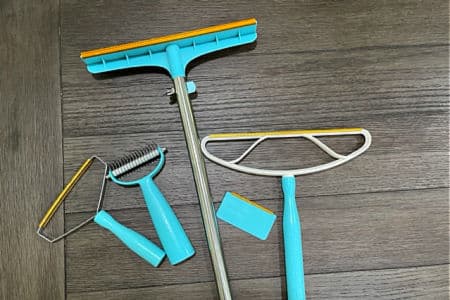
These pet hair removing tools have saved my sanity! You can remove dog hair from carpets, rugs, furniture and more SO EASILY. If you think your rugs are fur-free... run one of these babies over them AFTER you've vacuumed. You will me amazed at how much hair was still there.
There's even a deshedding tool to use on your dog before he deposits his fur all over the house. Win-win.